Santiago and Manolin
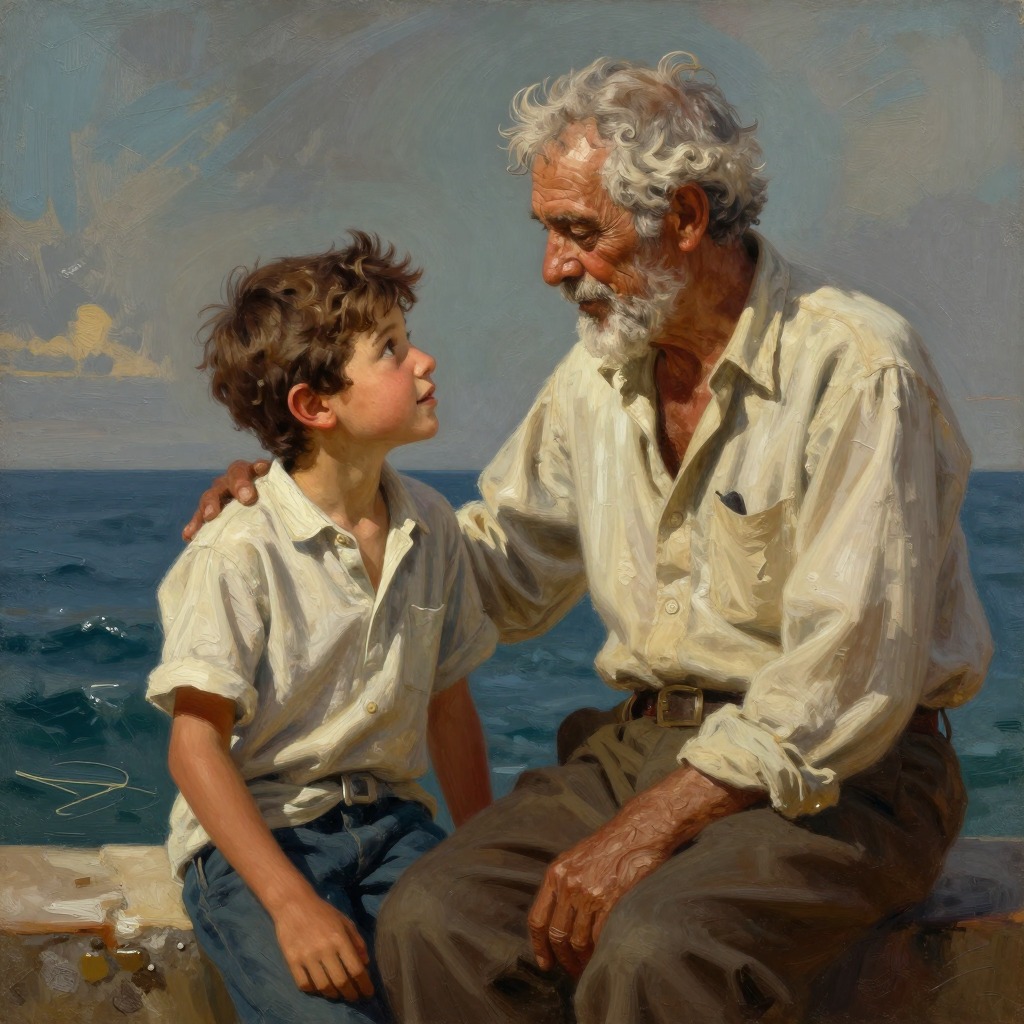
Santiago and Manolin, the old fisherman and the boy, share a relationship that is the emotional and moral heart of the novel. It is a bond of profound love, loyalty, and mutual respect, forged through years of shared labor and hardship, and it endures despite the forces of poverty, family obligation, and the old man's crushing bad luck. Their connection is not merely that of a teacher and student, but of a spiritual father and son, a partnership of equals, and a source of unwavering faith in one another.
Identity and Background
The old man, Santiago, is a fisherman who has gone eighty-four days without catching a fish, a run of such bad luck that the boy's parents have declared him "salao," the worst form of unlucky. Manolin, the boy, had fished with Santiago for the first forty days of this streak, but was then ordered by his parents to join a more successful boat. Despite this separation, the boy's loyalty to Santiago never wavers. He continues to help the old man carry his gear each evening—the coiled lines, the gaff, the harpoon, and the patched sail that looks like "the flag of permanent defeat"—and he brings him food and coffee, often through a shared fiction that Santiago still possesses a cast net and a pot of yellow rice and fish, when in reality both have been sold. The boy's love is rooted in a shared history: Santiago taught him to fish when he was only five years old, a first trip that nearly killed the boy when a green fish nearly tore the boat apart, a memory the boy retains with vivid sensory detail of "the tail slapping and banging and the thwart breaking and the noise of the clubbing."
Arc Through the Plot
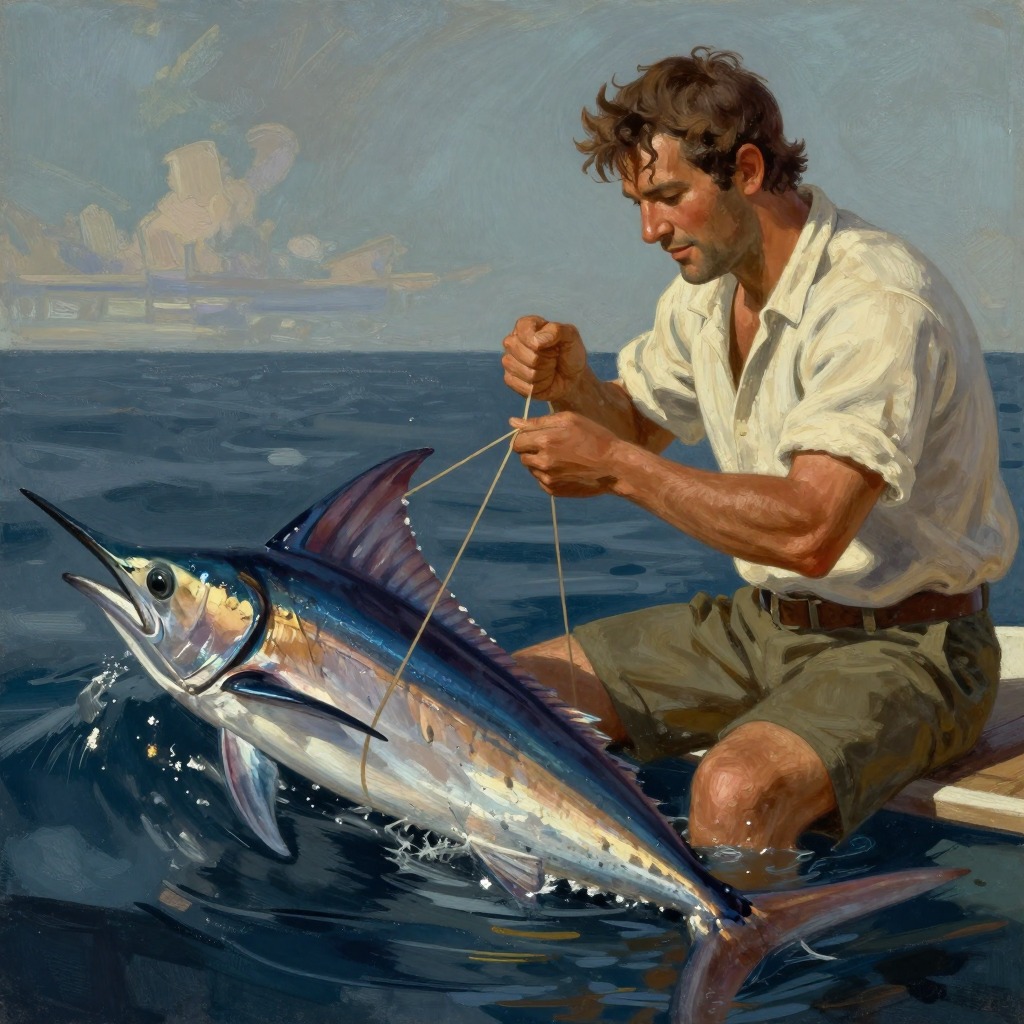
The relationship is defined by separation and longing. On the evening before Santiago's fateful voyage, the boy offers to rejoin him, but the old man refuses, insisting the boy stay with his lucky boat. Yet throughout his three-day ordeal at sea, Santiago's thoughts return constantly to the boy. He speaks aloud, "I wish I had the boy," not only for practical help—to wet the coils of line, to rub his cramped hand—but for the simple comfort of his presence. The boy is the one person Santiago wishes could witness the great fish, the one he misses when he is alone. After the sharks have destroyed the marlin, Santiago's first words upon waking in his shack are, "They beat me, Manolin. They truly beat me." The boy's response is immediate and fierce: "He didn't beat you. Not the fish." He insists they will fish together again, declaring, "The hell with luck. I'll bring the luck with me." The boy's faith restores Santiago's spirit, and they immediately begin planning for the future—a new killing lance, a knife, a spring leaf from an old Ford to grind into a blade.
Relationships and Conflict
The central conflict in their relationship is external: the boy's family and the social pressure of luck. The boy's father, lacking faith, forced him to leave Santiago. The boy obeys, saying, "I am a boy and I must obey him," but he remains emotionally and practically committed to the old man. He brings him food from Martin, the Terrace owner, and sardines for bait, and he sits by Santiago's bed after the ordeal, crying when he sees the old man's ruined hands. The conflict is resolved when the boy, after Santiago's return, definitively chooses the old man over his family's wishes: "I do not care. I caught two yesterday. But we will fish together now for I still have much to learn." This choice is a declaration of loyalty that transcends blood and economic calculation.
Change and Ending
The relationship undergoes a subtle but profound transformation. At the story's opening, the boy is a devoted student, helping the old man but still subject to his parents' authority. By the end, the boy has become the caretaker and protector. He brings coffee, promises to get medicine for Santiago's hands, and sits vigil by his bed. The old man, in turn, accepts this care, admitting his defeat and his need. The final image of the novel is the boy sitting by the sleeping old man, watching him dream of the lions. The relationship has cycled from teacher-student to a mutual, adult partnership, with the boy now the one who will bring luck and the old man the one who will teach everything he knows.
Thematic Significance
The bond between Santiago and Manolin embodies the novel's central themes of love, loyalty, and the refusal of defeat. It is a relationship that exists outside the market logic of the fishing economy—the boy brings food not for payment but out of love, and the old man's greatest wish is not for the fish's market value but for the boy to see it. Their connection is a counterpoint to the solitary struggle at sea, proving that no man is truly alone. The boy is Santiago's link to the human world, the one who keeps him alive in spirit and in fact. Their relationship is the novel's answer to the question of what makes life meaningful: not the catch, but the shared love and the promise of fishing together again.